
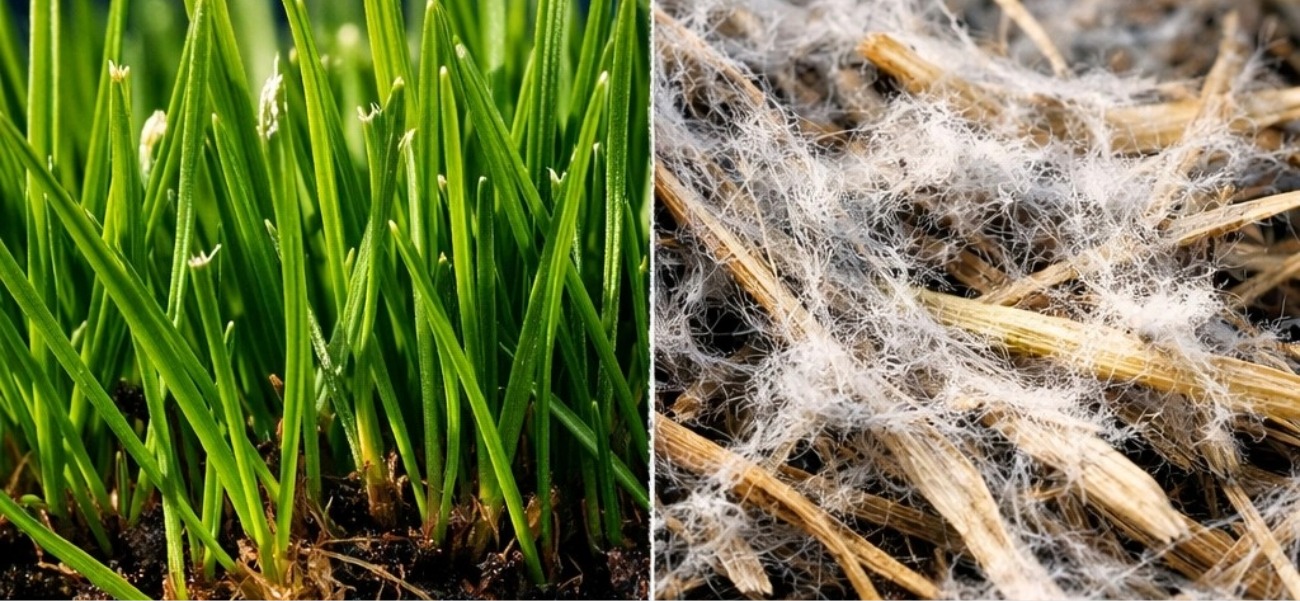
You made it through another long winter. The snow melts, temperatures rise, and you’re ready for that first glimpse of green.
Instead, you step outside and see circular patches of gray or pink, matted grass—more like a worn-out rug than a healthy lawn.
That’s snow mold. And this year, conditions are lining up for it to make a strong return.
Why Snow Mold Is Making a Comeback
Snow mold hasn’t been a major issue in recent years, but this season tells a different story. Extended snow cover, fluctuating temperatures, and excess moisture have created ideal conditions for a spring outbreak.
The key thing to understand is this: snow mold doesn’t suddenly appear when the snow melts. It develops quietly underneath it. By the time you see the damage, the fungus has already been active for weeks or even months.
What Is Snow Mold?
Snow mold is a fungal disease that affects cool-season grasses during late winter and early spring. It thrives when temperatures hover between 32°F and 45°F, especially when moisture is trapped under snow cover.
Because it forms out of sight, many homeowners are caught off guard when the snow recedes and the damage is revealed.
Meet the Two Types: Gray vs. Pink Snow Mold
Not all snow mold behaves the same way. Understanding the difference helps explain the level of damage you may be seeing.
Gray Snow Mold
Gray snow mold is the more common and less severe type. It typically affects only the grass blades, not the roots.
- Appears as grayish or white circular patches
- Usually ranges from a few inches to about a foot in size
- Grass looks matted and brittle as it dries
- Often develops after long periods of snow cover
The good news is that lawns affected by gray snow mold can often recover with time and proper care.
Pink Snow Mold
Pink snow mold is more aggressive and can cause lasting damage.
- Shows a pink or reddish tint, especially when wet
- Patches can grow larger and merge together
- Attacks not just blades, but roots and crowns
- Can develop even without prolonged snow cover
Because it impacts the root system, recovery is slower and may require more intervention.
Why Your Lawn Is at Risk This Year
Certain conditions make snow mold more likely, and many lawns experienced them this winter:
- Snow cover sitting on unfrozen ground
- Excess moisture with limited airflow
- Thick thatch layers holding in moisture
- Long grass going into winter
- Poor drainage in problem areas
When these factors combine, they create the perfect environment for fungal growth beneath the surface.
What to Look for This Spring
As your lawn begins to wake up, keep an eye out for:
- Circular or irregular patches of matted grass
- Gray, white, or pink discoloration
- A cobweb-like fungal appearance when grass is wet
- Brittle, straw-like blades after drying
These patches can linger well into spring and impact the overall look and health of your lawn if not addressed properly.
The Moyer Approach: Prevention Starts Below the Surface
The biggest misconception about snow mold is that it should be treated after it appears. In reality, the most effective control starts before it ever develops.
That’s where Moyer’s Total Green and Soil Care program makes the difference.
By focusing on soil health, we create stronger, more resilient turf that can naturally resist disease pressure. Healthy soil improves drainage, reduces excess moisture, and supports stronger root systems—all key factors in preventing fungal issues like snow mold.
Our approach includes:
- Building balanced, nutrient-rich soil
- Reducing thatch and moisture buildup
- Strengthening root systems for healthier turf
- Monitoring lawn conditions throughout the seasons
Get Ahead of Snow Mold This Season
With conditions pointing toward a higher risk this spring, now is the time to take a proactive approach.
Snow mold may be the last reminder of winter—but it doesn’t have to define your lawn this season.