
Carpenter ants are more than just a nuisance—they excavate wood in homes to create nests, potentially causing structural damage over time. Unlike termites, they don’t eat wood but are drawn to certain conditions that make homes inviting for nesting and foraging.
Understanding what attracts carpenter ants is the first step toward preventing infestations before they start. From moisture and softened wood to accessible food and shelter, small factors can make a big difference in whether ants settle in.
Signs of a Carpenter Ant Colony in Your Home
Even small satellite colonies can cause damage if left untreated. Watch for these indicators:
- Frass: Small piles of sawdust-like material, often mixed with insect parts, found near baseboards, windowsills, or wood structures.
- Nest Size: Colonies can range from a few dozen to hundreds of ants; satellite nests may be smaller but active, typically in damp or decayed wood.
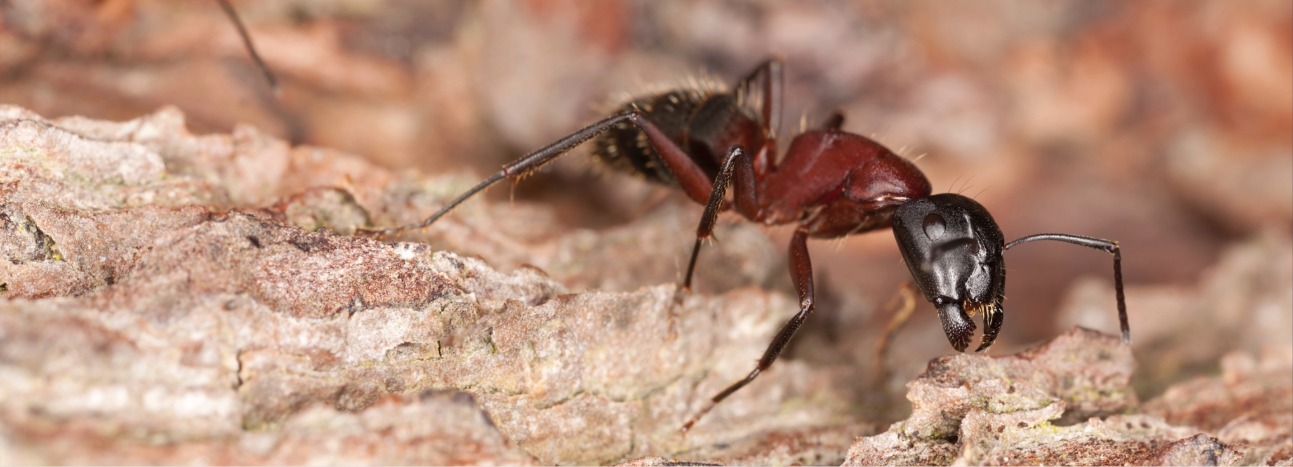
- Ant Identification: Large black or reddish-black worker ants, approximately ¼” – ½”, are larger than common ants; winged ants appear during the spring reproductive cycle.
- Rustling or Scraping Noises: Faint sounds inside walls, ceilings, or wooden beams.
- Visible Trails: Lines of worker ants traveling between food sources and nesting areas.
What Attracts Carpenter Ants in Your Home
Moisture and Softened Wood: Primary Nesting Attractants
Carpenter ants prefer wood that has been softened by moisture or decay, making it easier for them to tunnel. Common attractors include:
- Roof leaks, clogged gutters, or poor drainage
- Wood in contact with soil, such as porch posts or deck beams
- Interior areas with plumbing leaks or high humidity, like bathrooms, kitchens, and basements
Moisture doesn’t just attract ants; it also enables colonies to establish and expand. Fixing leaks, improving ventilation, and keeping wood dry are essential steps to reduce nesting opportunities.
Accessible Food Sources
Carpenter ants are omnivores, drawn to both sugars and proteins:
- Sweet foods: juice spills, syrup, honey, and honeydew from aphids
- Proteins: meat scraps, pet food, dead insects
- Grease and crumbs in kitchens or trash areas
Carpenter ants rely on pheromone scent trails to guide other ants to food sources. That’s why you may notice ants returning to the same areas or traveling in visible lines. Even after cleaning, scent trails can linger, especially if crumbs, sticky spills or residue, or moisture remain behind. Thorough cleaning and eliminating attractants are key to breaking the cycle and discouraging repeat activity.
Shelter and Entry Pathways
Even with moisture and food available, ants need access points to enter structures, such as:
- Cracks and gaps around foundations
- Unsealed utility entries
- Tree limbs or shrubbery touching the home
- Firewood or mulch stacked against the exterior
Sealing these access points, along with maintaining the surrounding landscape, helps prevent ants from entering and reduces the likelihood of nests forming inside structures.
How to Prevent Attracting Carpenter Ants
Home Interior
- Repair leaks and manage humidity
- Seal food containers and clean counters regularly
- Empty trash and reduce crumbs
Home Exterior
- Trim foliage away from the home
- Move firewood and lumber away from foundations
- Ensure proper drainage around gutters and landscaping
- Seal cracks and gaps around doors, windows, and utility lines
These steps are part of an ongoing preventative approach—not a one-time fix—and significantly reduce the likelihood of ant infestations.
Carpenter Ant Prevention and Monitoring
Carpenter ants will return if the conditions that attracted them remain unchanged. Targeted treatments combined with monitoring and proactive maintenance can disrupt ant activity and prevent colonies from establishing.
A strategic prevention plan includes:
- Inspection to identify moisture, food, and access points
- Perimeter treatments to protect vulnerable areas
- Follow-up visits to check for activity and reinforce protection
- Guidance on ongoing habitat management
This approach focuses on reducing attractants and protecting the home long-term, rather than just treating visible ants.
When to Call Moyer Pest Control to Help Get Rid of Carpenter Ants
Preventing carpenter ant infestations requires attention to many factors and a strategic, targeted approach to protection and maintenance.
Early action and ongoing care from Moyer can stop small problems from turning into costly damage, keeping homes safe and ant-free.