
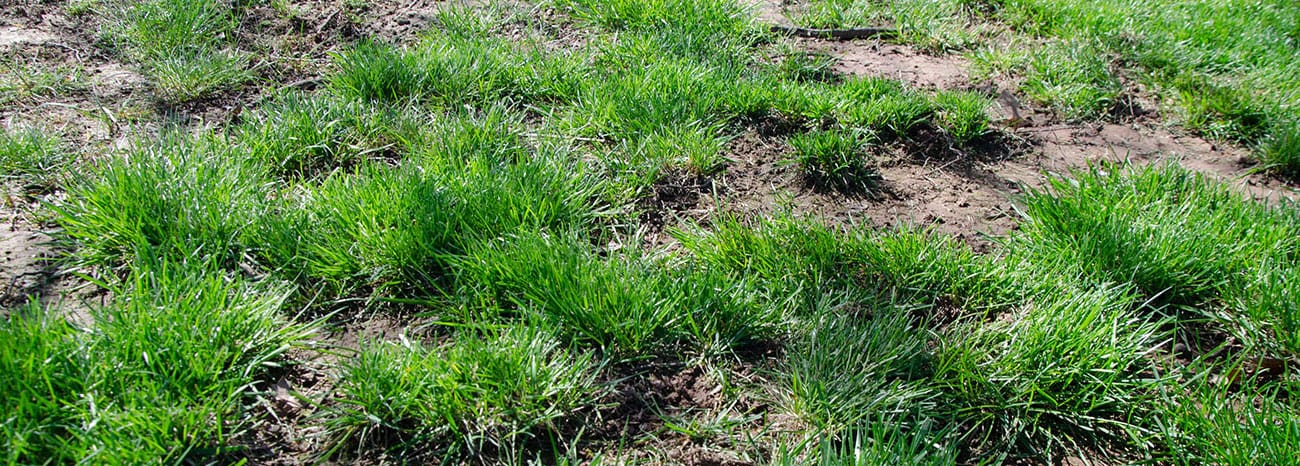
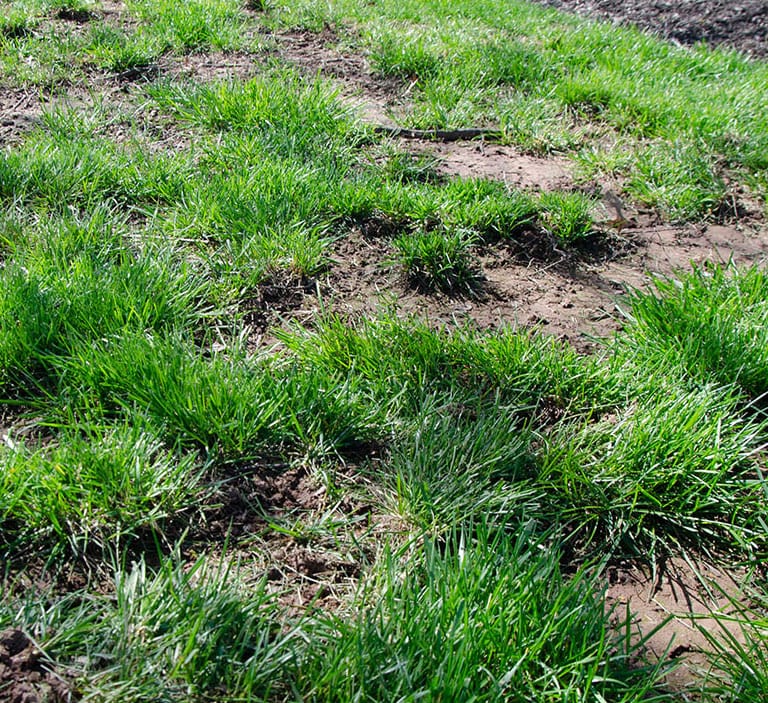
If your lawn is thinning out, dying in patches, or covered in bare spots where nothing wants to grow, the fix in most cases is overseeding: spreading new grass seed over the existing lawn so the fresh growth fills in the gaps. For badly damaged lawns, slice seeding, sodding, or a full renovation may be the right call instead. In the Pennsylvania climate the best time to overseed or reseed a lawn is mid-August through mid-September, when soil is still warm enough for germination and cool nights encourage grass to establish before winter.
This guide walks through how to tell whether your lawn is actually dead (versus dormant), the difference between overseeding and reseeding, all five main renovation methods, when to use each one, and how to overseed a lawn step-by-step. Everything applies to the cool-season grasses that grow across Pennsylvania: tall fescue, Kentucky bluegrass, and the ryegrasses.
Dead grass or dormant grass? Diagnose before you renovate
Before you spend a weekend renovating a lawn, make sure the grass is actually dead. Cool-season grasses in the Delaware Valley go dormant during summer heat and drought, and dormant grass looks a lot like dead grass. It turns tan or straw-colored, feels crunchy underfoot, and stops growing. The difference is that dormant grass wakes up when temperatures cool and rainfall returns; dead grass does not.
The simplest test is the pull test. Grab a handful of the tan grass and tug gently. Dormant grass roots hold firm and require real effort to uproot. Dead grass pulls up easily, roots and all, leaving loose soil behind. If most of the tan area passes the pull test (holds firm), water the lawn deeply once or twice a week for two to three weeks and wait for temperatures to drop. If the grass pulls up easily, you’re looking at dead patches that need reseeding or overseeding.
Bare spots that never had grass, or that have been bare for a full season, are a separate case. Those usually need soil preparation before new seed will take, especially in high-traffic areas where the soil has become compacted, or in shaded areas where existing grass has struggled for years.
Overseeding vs reseeding: what’s the difference?
Homeowners use these terms interchangeably, and for most practical purposes they refer to the same idea: spreading new grass seed on an existing lawn to fill in thin or bare areas. Both are more efficient and less expensive than tearing out a lawn and starting over.
The narrow technical distinction is that overseeding refers to spreading seed over an entire lawn to thicken it and introduce improved grass varieties, while reseeding usually implies focused work on specific patches or a whole lawn that has failed. In practice, the process is the same. Both benefit from aeration first, both need consistent watering during germination, and both work best in the same seasonal window.
Neither works well on soil that hasn’t been prepared. Grass seed scattered on top of hard, dead, or compacted ground will mostly wash away or dry out before it germinates. The success of overseeding or reseeding depends less on the seed itself and more on the seed-to-soil contact you can create.
The five main methods for renovating a lawn
There are five renovation approaches, from the light-touch to the complete rebuild. Which one fits your yard depends on how much of the lawn has failed, what caused the damage, your budget, and how quickly you need results.
Aeration and overseeding
The most common method, and the right starting point for most lawns with thinning grass, moderate bare spots, or compacted soil. Aeration removes small plugs of soil across the lawn (usually with a core aerator), which relieves compaction and creates channels for water, air, and nutrients to reach the root zone. Immediately after aeration, seed is spread across the lawn so it falls into the aerated holes and against fresh soil, giving each seed the seed-to-soil contact it needs to germinate.
Aeration plus overseeding is ideal for lawns that have gradually thinned out from age, foot traffic, or minor drought stress. It’s the least disruptive of the renovation methods and can be done in a weekend on a residential lawn. The improvement is gradual: expect new grass to be visible within two to three weeks and full fill-in over a season or two.
Slice seeding
Slice seeding uses a machine (a slit seeder or slice seeder) to cut narrow grooves into the soil and drop seed directly into those grooves at the same time. This gives even better seed-to-soil contact than aeration alone, and it works well on lawns that are more heavily damaged than overseeding can handle but not so far gone that a full rebuild is needed.
Slice seeding is the right choice when a lawn has extensive thin patches or when previous overseeding attempts haven’t produced good coverage. It’s also common on lawns with heavy thatch layers, because the slicer cuts through thatch to reach the soil below. The tradeoff is cost: slice seeding equipment isn’t practical for most homeowners to own, so this is typically a professional service.
Sodding
Sodding lays down pre-grown grass in strips of turf, complete with soil and root mat. The lawn is essentially finished the day the sod is installed, which is the biggest advantage: instant coverage instead of waiting weeks for seed to germinate.
Sodding is worth the higher cost when you need immediate coverage, when you’re renovating a small area, or when erosion control matters (freshly seeded areas can wash out on slopes; sod holds soil from day one). It also avoids the weed pressure that comes with germinating seed in bare soil. The downsides are cost (sodding runs several times the per-square-foot price of seeding) and aftercare demands: freshly laid sod needs frequent watering to establish, and the root mat has to knit into the soil below before the lawn tolerates normal use.
Hydroseeding
Hydroseeding sprays a slurry of water, seed, fertilizer, mulch, and a tackifier (a substance that helps the mixture stick to soil) onto the lawn. The mulch holds moisture around the seed while it germinates, which produces faster and more uniform coverage than dry seeding on the same soil.
Hydroseeding is well-suited to large areas, sloped terrain, and lawns where erosion control is a concern but the budget doesn’t justify sod. It’s cost-effective for anything larger than a typical residential yard and is common on new construction sites and commercial properties.
Grading
Grading isn’t really a renovation method on its own. It’s the prerequisite when the underlying problem is drainage or slope. If water pools on your lawn after rain, if there are chronic wet spots, or if runoff is eroding grass away, no amount of overseeding will fix the surface until the grade underneath is corrected.
Grading involves reshaping the soil to create a gentle slope that carries water away from your home and toward drainage. It’s disruptive (the existing lawn typically has to come up) and expensive, but for lawns with real drainage problems it’s the only permanent fix. Grading is usually followed immediately by sodding or hydroseeding to re-establish the lawn.
Which renovation method is right for your lawn?
For most Pennsylvania lawns that have thinned out or developed moderate bare spots, aeration plus overseeding is the correct answer, and it should be the first thing you try. If overseeding hasn’t worked on a lawn once or twice already, or if the damage is more extensive than scattered thin patches, move up to slice seeding. If you need a lawn tomorrow rather than a lawn in three months, choose sodding for the affected area. If you’re dealing with a large lawn, a slope, or an erosion problem, hydroseeding is often the right cost-versus-coverage tradeoff. And if water is pooling anywhere on your yard, grade before you seed.
The one situation where none of these methods will produce a durable result is when the underlying cause of the dead grass hasn’t been addressed. If your lawn died from a pest infestation (grubs are the usual suspect in the Delaware Valley), from a fungal disease, from soil chemistry problems (a soil test showing extreme pH imbalance), or from ongoing overwatering or drought, the same conditions will kill the new grass. Diagnose the cause before you renovate, then renovate.
The best time to overseed a lawn in Pennsylvania
For cool-season grasses in southeastern Pennsylvania and the wider Delaware Valley, the optimal window for overseeding is mid-August through mid-September. Soil temperatures are still warm enough for reliable germination (grass seed needs soil above about 55°F to germinate consistently), overnight temperatures have started to cool, and the new grass has six to eight weeks of good growing conditions before the first hard frost.
Spring is the second-best window. Early to mid-April, once the soil has warmed above the same 55°F threshold and the risk of a killing frost has passed, gives new grass enough time to establish before summer heat arrives. Spring overseeding is more prone to failure than fall overseeding for two reasons: pre-emergent crabgrass control (applied in late March or early April in this region) will also prevent grass seed from germinating, and new grass planted in spring has to survive its first summer without a fully developed root system.
Overseeding in mid-summer, late fall, or winter is not recommended for cool-season grasses in Pennsylvania. Summer heat and drought stress kill seedlings before they establish; late fall and winter are too cold for germination.
How to overseed a lawn: step-by-step
If you’re planning to overseed a residential lawn yourself, the process takes one weekend of active work plus two to three weeks of watering while the grass germinates. You’ll need a rake, a core aerator (rentable at most home improvement stores for a day), a broadcast spreader, cool-season grass seed appropriate for your area (tall fescue is the most forgiving choice for mixed sun and shade in PA), starter fertilizer, and possibly topsoil for badly damaged patches. Pick a day when the weather is calm rather than windy, because gusts will scatter both seed and fertilizer unevenly.
- Step 1: Measure the area. Multiply length by width for a rough square footage, which tells you how much seed and fertilizer to buy. A measuring wheel helps for irregular lawns.
- Step 2: Stop routine fertilizing at least a month before overseeding. New seed shouldn’t have to compete with well-fed existing grass for water and light while it germinates. If you’re on a fertilization schedule, plan the overseeding date first and work backward.
- Step 3: Mow the lawn short. Cut existing grass to about 1 to 1.5 inches, which is shorter than normal mowing height. This lets sunlight reach the soil where new seedlings will grow.
- Step 4: Rake and dethatch. Remove grass clippings and any thatch layer that would block seed from reaching the soil. On lawns with heavy thatch, a power dethatcher (also rentable) does the work faster than hand raking. Fill obvious bare spots with a thin layer of topsoil.
- Step 5: Aerate. Run a core aerator across the entire lawn, pulling soil plugs about two to three inches long. Leave the plugs on the surface; they’ll break down within a week or two and add nutrients back to the soil.
- Step 6: Spread the seed, then the fertilizer. Use the broadcast spreader to distribute grass seed evenly across the lawn at the rate specified on the seed bag (typically about 6 to 8 pounds per 1,000 square feet for tall fescue overseeding). Make a second pass with starter fertilizer, which is formulated to support new grass rather than mature turf.
- Step 7: Water. Lightly water the entire area to settle the seed against the soil. Do not soak it: heavy watering right after seeding washes seed into puddles.
Aftercare: keeping new grass alive while it establishes
The first two to three weeks after overseeding determine whether the renovation succeeds. New grass seed needs consistent soil moisture to germinate, and once germinated the young seedlings have almost no drought tolerance until their roots develop.
Plan to water lightly three or four times a day for the first two to three weeks, enough to keep the top inch of soil consistently moist without creating standing water. Once new grass reaches about one inch tall, you can shift to once-daily watering. Once it reaches two inches, you can start mowing (set the mower high, at least three inches) and shift to a normal deep-and-infrequent watering schedule: one to one and a half inches of water per week, delivered in one or two sessions rather than daily light watering.
Wait about six weeks after overseeding to apply the next fertilizer treatment. From then on, follow a normal cool-season fertilization schedule of roughly one application every six weeks through the growing season.
Foot traffic and pet activity should stay off the overseeded area as much as possible for the first month. Once the new grass is mowed twice, it’s established well enough for normal use.
DIY overseeding or hire a professional?
Overseeding a small to medium residential lawn is genuinely a DIY-friendly project. The equipment is rentable, the process is well-documented, and even an imperfect first attempt produces some improvement. What DIY overseeding costs is time: a full weekend of active work, plus the daily watering commitment during germination.
Professional lawn care is worth the cost when the lawn is large, when the damage is extensive enough that slice seeding or grading is on the table, when you’ve tried DIY overseeding once or twice without success, or when you don’t have the schedule to commit to the watering routine that new seed requires. Professional lawn services also identify and treat the underlying cause of the dead grass (soil compaction, grubs, disease, pH imbalance) rather than just addressing the symptom.
For lawns in Bucks, Montgomery, and Delaware counties, Moyer Indoor Outdoor’s lawn care team handles overseeding as part of a full lawn renovation service, including soil assessment, aeration, seed selection appropriate for local conditions, and the follow-up program that keeps new grass alive through its first year. Call (215) 799-2016 or schedule a lawn assessment online.
Frequently asked questions
Can you seed over dead grass?
Yes, but not without preparation. Grass seed spread on top of dead grass will mostly fail because the seed can’t reach the soil below through the thatch and dead material. To reseed dead grass successfully, rake out the dead material first, aerate or scratch up the soil to create seed-to-soil contact, then spread the seed and keep it consistently moist until it germinates.
What does overseeding look like when it’s working?
For the first week to ten days after overseeding, the lawn looks the same as before, because the seed hasn’t yet germinated. Between day 10 and day 21, thin, light green seedlings emerge across the aerated areas, initially looking like fine, sparse grass. Over the next four to six weeks the new grass thickens and darkens as it matures. Full visual improvement typically takes one full growing season.
How often should you overseed your lawn?
Most residential lawns benefit from overseeding every two to three years to maintain density and introduce improved grass varieties. Lawns with heavy foot traffic, pet damage, or persistent thin areas may need annual overseeding. A lawn that stays consistently thick and green may not need overseeding for four or five years at a stretch.
What’s the difference between overseeding and reseeding?
In everyday use, homeowners use these interchangeably. Both refer to spreading new grass seed on an existing lawn. The narrow technical distinction is that overseeding is typically a whole-lawn application to thicken existing grass, while reseeding often refers to focused work on specific dead or bare areas. The process and timing are the same either way.
How long until new grass fills in bare spots?
Grass seed germinates in seven to fourteen days in warm soil (slower in cooler soil). New seedlings are visible within two to three weeks, reach mowable height in four to six weeks, and produce full coverage of a bare spot within a full growing season. Sodded areas, by comparison, appear finished the day they’re laid down.
Do you have to aerate before overseeding?
Not always, but strongly recommended. Aeration creates the seed-to-soil contact that overseeded lawns need. Skipping aeration usually reduces germination success by 30 to 50 percent because so much seed sits on top of thatch or hard soil where it can’t take root. On lawns with soft, uncompacted soil and minimal thatch, hand-raking to expose soil in seeded areas is an acceptable substitute.
When is the best time to overseed in Pennsylvania?
Mid-August through mid-September is the optimal window for cool-season grasses in southeastern Pennsylvania. Early to mid-April is the second-best window. Avoid overseeding in summer heat or after early October.
Can I overseed and apply weed control at the same time?
No. Most weed control products (pre-emergent crabgrass control especially) also prevent grass seed from germinating. Overseeding should happen a minimum of four weeks after a pre-emergent application, or you should skip the pre-emergent that year in favor of the overseeding.