

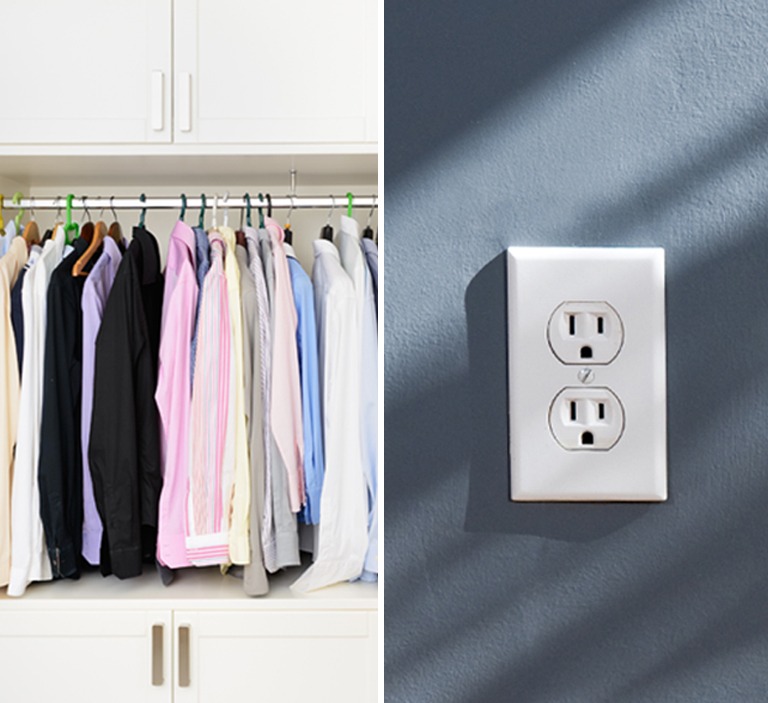
Bed bugs hide in closets, beds, mattresses, box springs, upholstered furniture, nightstands, luggage, wall voids, and other tight, dark spots close to where people sleep. According to the Centers for Disease Control and Prevention, bed bugs tend to live within 8 feet of where people sleep, though they can travel over 100 feet in a single night when searching for a blood meal. Moyer Indoor Outdoor has treated bed bug infestations across Bucks, Montgomery, and Delaware counties since 1869, and the pattern is consistent: bed bugs go where their hosts spend time, and they hide in the smallest cracks and folds they can find.
This guide walks through every common bed bug hiding place, how bed bugs get into your home in the first place, whether they bite pets, and how to inspect your home yourself before deciding whether to call a professional.
The 10 most common places bed bugs hide
- In closets and clothing: clothes hanging on rods, folded garments, and items stored on closet floors
- In and around beds: mattress seams, box springs, bed frames, headboards, and behind headboards
- In upholstered living room furniture: under cushions, along seams, in the crevices of couches and chairs
- In nightstands and bedside items: inside drawers, in the seams of books, behind alarm clocks and lamps
- Behind baseboards and inside wall voids: where wood meets carpet or where drywall meets floor
- Around electrical outlets and switch plates: bed bugs use wall voids adjacent to outlets to travel between rooms
- In luggage and travel bags: especially bags left on hotel floors or luggage racks
- In pet beds and pet furniture: particularly when the pet sleeps near where people sleep
- In carpet edges and under area rugs: anywhere the carpet backing creates a fold or seam
- In curtains, wall hangings, and picture frames: behind and inside anything mounted on bedroom walls
Bed bugs prefer to hide within 8 feet of where people sleep or spend long stretches of time, because they need to feed on human blood roughly every five to ten days. Any tight, dark, undisturbed spot within reach of a sleeping human is a candidate.
Where do bed bugs hide in closets and clothing?
Yes. Bed bugs live in closets, hide in hanging clothes, and can travel in clothing stored in drawers, wardrobes, and cupboards. This is one of the most common places infestations spread from the bedroom, especially when a closet is close to the bed.
Bed bugs in a closet typically hide in:
- Hanging clothes, particularly along seams, in pockets, and inside collars and cuffs. Clothes worn recently are the most likely targets because they carry residual body heat and skin oils.
- Folded clothing and linens on shelves, especially in stacks that don’t get moved often
- Shoes and shoe boxes on the closet floor
- Boxes, bags, and stored luggage kept in the closet
- Carpeting or carpet edges along the closet walls
Are hanging clothes in a closet safe from bed bugs? Not automatically. Hanging clothes are safer than folded clothes because bed bugs prefer tight, still spaces, but they will crawl up clothing that touches the floor or that hangs near an infested wall. Clothes that haven’t been worn in a long time and hang in the middle of a rod (not touching walls or the floor) are the lowest risk.
What to do if you find bed bugs in your closet:
- Do not throw the clothes away. You will just spread the infestation to the trash room and possibly to whoever handles the bag.
- Machine-wash and dry all washable items on the hottest setting the fabric will tolerate. Thirty minutes in a hot dryer is what kills bed bugs, not just the wash.
- For dry-clean-only items, bag them tightly and take them to a dry cleaner (inform the cleaner).
- Empty the closet and inspect the walls, baseboards, and any stored items.
- Do not put clothes back until the room has been professionally treated, or you will re-infest the cleaned clothing.
Clothes and closet content are one of the primary ways bed bugs travel between rooms of a home, and between homes, which is why they show up in unexpected places like offices, gyms, and hotels far from the original infestation.
Where do bed bugs hide in and around your bed?
The bed itself is where infestations most often start and where the largest bed bug populations are typically found. Specific hiding spots include:
- Mattress seams and piping. Run a flashlight along every stitched edge.
- Box springs, especially the underside where the fabric meets the wood frame. Box springs are often more heavily infested than the mattress.
- Bed frame joints. Wooden frames with slots, brackets, and screws are ideal hiding spots.
- Headboards, including behind wall-mounted headboards and inside upholstered headboard buttons and tufts
- Under the bed, including anything stored underneath such as shoes, storage boxes, and unused bedding
- Behind the headboard on the wall itself. Bed bugs travel from mattress to wall to nearby furniture.
If bed bugs have been in a bed for more than a few weeks, you may see rusty or dark spots on sheets and mattress (digested blood), tiny pale-yellow shed skins from molting nymphs, or eggshells clustered in seams.
Where do bed bugs hide in living room furniture?
Bed bugs will infest couches, recliners, and upholstered chairs whenever people spend significant time on them. This is why homes where someone sleeps on the couch, or where family regularly falls asleep watching TV, often have living-room infestations that rival the bedroom.
Check:
- Under and around cushions, including the seams where the cushion meets the frame
- Inside the folds of upholstery on armrests, backrests, and skirt fabric
- Under the furniture, inside the fabric that lines the underside of couches and chairs
- Around and inside the legs and frames, including bolts, screws, and any joints
- End tables and coffee tables, especially where the leg meets the tabletop
A flashlight is essential. Adult bed bugs are about the size and color of an apple seed, but they flatten themselves into cracks smaller than a credit card thickness.
Where else do bed bugs hide in your home?
Beyond the bedroom and living room, bed bugs are found in:
- Wall voids and behind electrical outlet covers. Bed bugs use the space between drywall and studs, and the openings around outlets and switch plates, to travel from room to room and even between apartments. This is why removing a switch plate cover is part of a thorough inspection.
- Baseboards and carpet edges. The gap where the baseboard meets the floor and the seam where carpet ends at the wall are both common hiding spots.
- Nightstands and dressers, including inside drawers, in the joints of the wood, and behind the drawers themselves
- Picture frames and wall art, especially frames hanging above or near the bed
- Curtains. Bed bugs will climb curtains that touch the floor or the bed.
- Cardboard boxes. The folds and glue lines of corrugated cardboard are ideal hiding places.
How do bed bugs get into your home?
Bed bugs don’t come from your yard, and they aren’t drawn to filth. They are drawn to human blood, and they get into homes by hitchhiking on people and belongings that have been somewhere bed bugs already were.
The most common entry points are:
- Luggage from travel. Hotel rooms, motel rooms, and short-term rentals are common exposure points, even at the higher end of the price range.
- Used furniture. Mattresses, box springs, and upholstered furniture bought secondhand, taken from curbsides, or received as hand-me-downs.
- Guests and visitors. Bed bugs can travel in on a friend’s coat, bag, or overnight items.
- Shared seating in public spaces, including buses, trains, planes, taxis, rideshare vehicles, movie theater seats, waiting room chairs, and even some office chairs
- Neighboring apartments and shared walls. In multi-unit buildings, bed bugs travel through wall voids, along shared plumbing, and between apartments via the same outlet-and-baseboard routes they use inside a single home.
- Deliveries and packages. Rare but documented, especially with used-goods shipments.
Bed bug eggs are the size of a pinhead and don’t need a parent to hatch, so a single bag, box, or piece of luggage can carry the start of a full infestation.
Bed bugs don’t discriminate by cleanliness. They’ve been found in five-star hotels, hospitals, luxury homes, and executive offices. Cleanliness reduces the number of hiding spots you have to inspect, but it does not prevent an infestation.
Do bed bugs live in places outside your home?
Yes. Bed bugs have been documented in:
- Hotels, motels, and short-term rentals (the most-reported category)
- Movie theaters and live-performance venues, where dark, seat-heavy rooms and rising carbon dioxide from audiences create good feeding conditions
- Libraries, especially in upholstered chairs and reading areas
- Retail stores, including in fitting rooms and on furniture displays
- Offices and workplaces
- Schools, daycares, and college dorms
- Retirement homes and assisted living facilities
- Public transit including bus, train, plane, and rideshare seats
- Medical waiting rooms and hospital rooms
The pattern is the same everywhere: any environment with soft seating, low light, and a steady flow of human occupants can host bed bugs. This isn’t a reason to avoid public spaces. It is a reason to inspect luggage, coats, and bags when you get home, particularly after overnight travel.
Do bed bugs bite cats and dogs?
Yes, bed bugs will bite dogs, cats, and other mammals when a human blood meal isn’t available. Bed bug bites on pets typically appear as small itchy welts on areas with less fur, such as the belly, ears, and paws.
A few important things to understand:
- Bed bugs prefer humans. In a household with both people and pets, bed bugs will feed on the people first. Pet bites are usually a sign that the infestation has grown large enough that bed bugs are searching for any available host.
- Bed bugs do not live on your pet. Unlike fleas and ticks, bed bugs feed briefly and then return to their hiding spot. You won’t typically see bed bugs on your dog or cat the way you’d see fleas.
- Flea and tick medications do not stop bed bugs. Neither do medicated collars or shampoos. There is no veterinary product on the market that prevents bed bug bites on pets.
- Your pet is not spreading bed bugs to the yard. Bed bugs don’t survive well outdoors and don’t establish outdoor populations. If your pet goes outside, they aren’t bringing bed bugs back in, but bed bugs may still be in the pet’s bed.
The most effective way to protect pets from bed bug bites is to eliminate the infestation in the home. There is no preventive treatment for pets.
For medical guidance on bed bug bites, the Centers for Disease Control and Prevention notes that bed bugs are not known to transmit disease to humans or pets, though bites can cause allergic reactions and secondary skin infections from scratching.
How to inspect your home for bed bugs
A thorough home inspection takes 30 to 60 minutes for a typical bedroom. You will need a flashlight, a credit card or thin plastic tool to run along seams, and a resealable plastic bag if you find anything you want to preserve for identification.
What you’re looking for:
- Live bugs. Adults are 4 to 5mm long, reddish-brown, and flat unless recently fed.
- Rust or dark spots on sheets, mattresses, and walls (digested blood)
- Pale yellow shed skins in seams and cracks (from molting nymphs)
- Tiny white eggs, about 1mm long, usually in tight clusters in seams
- A sweet, musty smell in heavily infested rooms
Where to check, in order:
- Strip the bed. Inspect every seam of the sheets, mattress, and box spring using a flashlight.
- Check the headboard, frame, and any joints or brackets.
- Pull the bed away from the wall and inspect the baseboards and outlet covers behind and beside the bed.
- Remove electrical outlet covers and shine a light inside the wall void (turn power off first).
- Inspect all upholstered furniture in the bedroom.
- Move to the closet: pull hanging clothes off the rod, inspect seams and pockets, and check the walls, corners, and floor.
- Inspect nightstands inside and out, including under the drawers.
- Check picture frames, curtains, and any wall-mounted items.
- Repeat in the living room, focusing on couches and recliners.
If you find signs in more than one room, the infestation is likely established and DIY treatment is unlikely to eliminate it.
When to call a professional for bed bug inspection
Professional inspection is warranted whenever:
- You’ve found bed bugs, eggs, or shed skins and want to know the full extent before treatment
- You suspect an infestation but can’t confirm it yourself
- You’ve had bites but no visible bugs (bed bugs are extremely good at hiding, and self-inspection often misses infestations in wall voids)
- You manage a property, hotel, dormitory, or healthcare facility and need to rule out infestation in multiple rooms
Trained bed bug technicians know exactly where to look, including inside wall voids, behind outlet covers, and in the specific furniture joints that DIY inspections routinely miss. Professional inspection also identifies the extent of an infestation before treatment starts, which matters because bed bugs found in more than one room typically require a coordinated whole-home approach rather than spot treatment.
DIY treatment products (foggers, bug bombs, over-the-counter sprays, essential oils, and DIY heat treatments) rarely eliminate bed bug infestations and often drive them deeper into walls where they’re harder to reach. Bed bugs run from heat and light, which is why professional treatment sequences the inspection, containment, and treatment steps in a specific order.
Moyer Indoor Outdoor has provided bed bug inspection and treatment across the five-county Bucks, Montgomery, Chester, Delaware, and Philadelphia region since 1869. Our licensed pest control technicians handle both residential and commercial infestations, including hotels, apartment complexes, and healthcare facilities.
Suspect bed bugs in your home? Schedule a bed bug inspection with Moyer or call (215) 799-2000.
Frequently asked questions about bed bug hiding places
Do bed bugs live in closets?
Yes. Closets are one of the most common hiding places outside of the bed itself, especially when the closet is close to the bedroom. Bed bugs hide in hanging clothes, folded garments, shoes, boxes, and along the closet walls and floor.
Do bed bugs hide in clothes?
Yes, particularly in clothes that hang undisturbed or that are folded and stored. Clothes worn recently carry body heat and skin oils that attract bed bugs. Clothes are also one of the most common ways bed bugs travel between rooms and between homes.
Are hanging clothes in a closet safe from bed bugs?
Not automatically. Clothes that hang in the middle of a rod without touching walls or the floor are lower risk than folded clothes on a shelf, but bed bugs can and will climb clothing that touches an infested surface.
Can bed bugs live in walls?
Yes. Bed bugs use wall voids to travel between rooms and, in multi-unit buildings, between apartments. They hide behind baseboards, inside the space around electrical outlets, and behind wall-mounted items like headboards and picture frames.
Do bed bugs live in furniture other than the bed?
Yes. Upholstered couches, recliners, and chairs are common secondary hiding spots, especially in homes where people spend significant time on the furniture.
Do bed bugs bite pets?
Yes, when a human blood meal isn’t available. Bed bugs prefer humans but will feed on dogs, cats, and other mammals. They don’t live on pets and can’t be prevented with flea or tick medications.
How far from the bed do bed bugs travel?
Bed bugs tend to live within 8 feet of where people sleep but can travel over 100 feet in a single night when searching for a blood meal, according to the Centers for Disease Control and Prevention. In heavier infestations, bed bugs will spread throughout a home and into adjacent rooms, wall voids, and even neighboring apartments.
Can bed bugs live outside?
Bed bugs don’t establish outdoor populations. They can survive short trips outside (in luggage, on people) but don’t live in yards, gardens, or on outdoor furniture the way ticks and mosquitoes do.
How long can bed bugs go without feeding?
Adult bed bugs can survive several months without a blood meal in the right conditions, which is why infestations sometimes appear in vacant homes and hotel rooms that have been unoccupied for extended periods.
Do bed bugs only live in dirty homes?
No. Bed bugs are attracted to blood and body heat, not filth. They’ve been documented in every type of home from public housing to luxury estates and every type of business from budget motels to five-star hotels.