
The most reliable signs of termites in a Pennsylvania house are winged swarmers or piles of shed wings near windows and doors in late winter and spring, pencil-width mud tubes on foundation or basement walls, and wood that sounds hollow or gives way when you probe it. If you find any of these, the next step is a professional inspection to confirm whether the colony is active and how far it has spread. A can of store-bought spray won’t settle that question.
Moyer Indoor Outdoor, the Souderton-based home services company founded in 1869, provides termite inspection, treatment, and monitoring for homes across Bucks, Montgomery, Chester, Lehigh, and Delaware counties in Pennsylvania and New Castle County, Delaware. This guide covers the termite species you’re actually dealing with here, the signs worth acting on, where to look in a local home, and what happens after you make the call.
First, some perspective. Termite damage builds over years, not days. According to Penn State Extension, damage that becomes visible is usually the result of years of infestation, and termites don’t cause a sudden collapse. You have time to make a careful decision. You just shouldn’t spend that time ignoring the evidence.
What kind of termites infest Pennsylvania homes?
The Eastern subterranean termite (Reticulitermes flavipes) is the termite that damages homes in southeastern Pennsylvania and northern Delaware. Penn State Extension notes that it’s present throughout the state. It nests in the soil, not inside your walls, and it reaches the wood in your house through underground tunnels and the mud tubes it builds over foundations.
A colony has three castes, and you’ll only ever see one of them without opening up wood. Workers are creamy white, about a quarter inch long, and do all the feeding and damage, but they avoid light. Soldiers are about the same size, with elongated yellowish heads and large jaws, and they stay with the workers. Swarmers, the winged reproductives, are dark brown to black, about 3/8 to 1/2 inch long, and they’re the ones homeowners notice.
Drywood termites, the species behind the droppings and sawdust signs you’ll read about on national sites, aren’t native to Pennsylvania. They occasionally arrive inside infested furniture or wooden crates shipped from warmer states, but they don’t establish in the local landscape. That distinction matters. Much of the termite advice online is written for Florida, Texas, or California, and it can steer Pennsylvania homeowners toward the wrong clues.
What are the signs of termites in your house?
Six signs point to termites in a Pennsylvania home: swarmers indoors, shed wings, mud tubes, hollow or damaged wood, blistered paint or sagging surfaces, and faint clicking inside walls. Swarmers or wings inside the house are the clearest early warning. Damaged wood usually means the colony has been feeding for some time.
Winged swarmers inside the house
Once a colony matures, it sends out winged reproductives to mate and start new colonies. In Pennsylvania this usually happens on warm days, often after rain. Swarmers are drawn to light, so indoors they cluster at windows, sliding doors, and light fixtures, and many die there from dehydration. The swarmers themselves don’t damage wood. A swarm inside the house, though, means a colony is feeding in or under the structure. A swarm outdoors from a stump or woodpile is less urgent, but it still tells you termites are active on the property.
Discarded wings on sills and floors
Swarmers snap off their wings shortly after landing. What’s left behind are small piles of silvery, translucent wings, all the same size, on windowsills, floors, and in cobwebs. Penn State Extension points out that shed wings are very often the only evidence a homeowner finds, because the swarm itself can be over in under an hour.
Mud tubes on foundation and basement walls
Mud tubes (also called shelter tubes) are earth-colored tunnels, typically about 1/4 inch wide, that termites build to travel between the soil and wood while staying protected from light and dry air. Look for them on basement and foundation walls, piers, sill plates, and the backs of stored items against a wall. University of Maryland Extension also lists soil packed into cracks and crevices as a related sign. If you break a small section open and it’s rebuilt within a few days, the colony is active. If you’d rather not disturb it, photograph the tube and leave it for the inspector.
Hollow, soft, or damaged wood
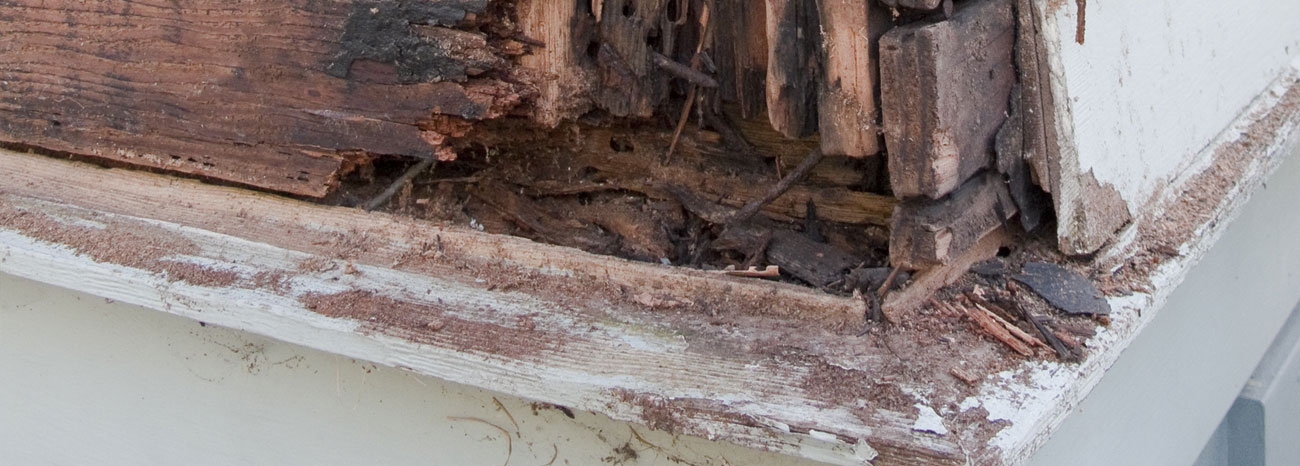
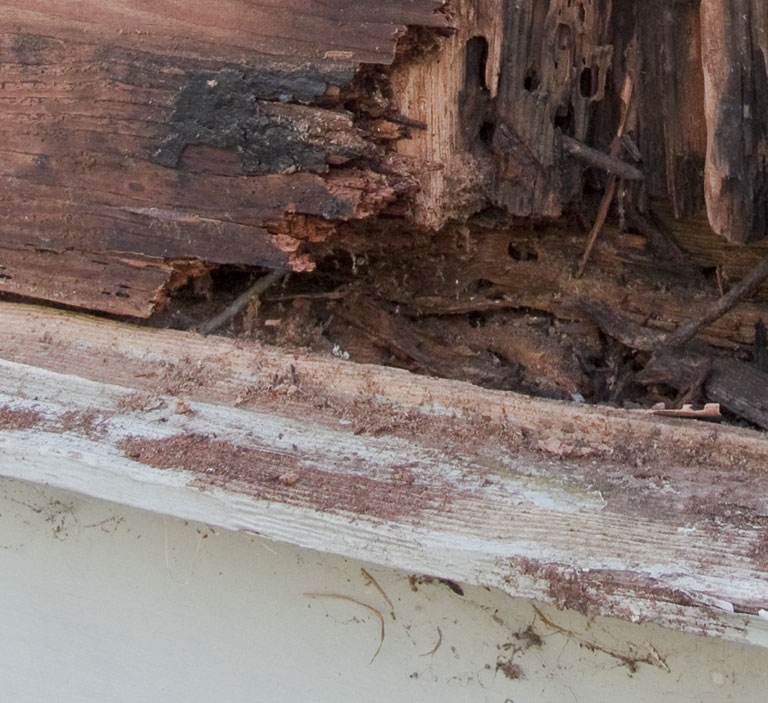
Workers eat wood from the inside, following the grain and leaving a thin outer shell that can look completely normal. Tap exposed wood with the handle of a screwdriver. Termite-damaged wood sounds dull or papery, and probing it may break through into hollow galleries. Termite galleries are lined with a soil-like material. That’s one way to tell termite damage from carpenter ant damage, where the galleries look clean and smooth.
Blistered paint, buckling floors, and sticking doors
Termite activity brings moisture into the wood, which can make paint bubble or peel and darken wood paneling in patches. As damage spreads, laminate or wood flooring may buckle, floors can sag, and doors or windows may start to stick in their frames. Each of these has other possible causes, especially in older homes, which is why they’re worth an inspection rather than a guess.
Faint clicking inside walls
When disturbed, soldier termites tap their heads against tunnel walls to warn the colony. The sound is faint and rarely the first thing anyone notices, but in a quiet room it can be the clue that sends you looking for tubes and damaged wood.
What about termite droppings (frass)?
Pellet-shaped droppings that look like sand or coffee grounds are a drywood termite sign. Eastern subterranean termites use their waste to build tunnels, so they don’t leave pellet piles. If you find sawdust-like debris in a Pennsylvania home, it more often points to carpenter ants or wood-boring beetles. That’s still worth identifying, just not as a termite emergency.
Where should you check for termites in a Pennsylvania home?
Start in the basement or crawl space. Penn State Extension notes that most Pennsylvania infestations occur in basement and cellar areas and in the structural wood just above the foundation walls, including sill plates, studs, joists, and subflooring. With a flashlight and a screwdriver, check these spots inside:
- Basement and crawl space walls, especially behind stored boxes and shelving
- Sill plates and the ends of floor joists where they rest on the foundation
- Wooden posts, steps, and door frames embedded in or resting on a concrete floor
- Areas around furnaces, chimneys, water heaters, and hot water pipes, which stay warm through the winter
- Baseboards, door trim, and window frames on the lowest living level
Outside the house
Walk the foundation perimeter and look for mud tubes running up the concrete or block. Pay close attention anywhere soil or mulch is piled against siding, where porch steps, deck posts, or trellises touch the ground, and near downspouts that leave the soil wet. Old stumps, buried scrap lumber, and firewood stacked against the house are all food sources that can draw a colony close to the structure.
What about the attic?
Subterranean termites depend on moisture from the soil, so attic infestations are uncommon. They’re most likely in homes with a persistent roof or plumbing leak, or with mud tubes running up from below. If you find sawdust, winged insects, or damaged wood in an attic, carpenter ants or wood-boring beetles are often the cause. An inspection will tell you which one you’re dealing with.
Termite or flying ant? How to tell the difference
Termite swarmers have straight antennae, a thick waist, and four wings of equal length. Flying ants have bent (elbowed) antennae, a pinched waist, and front wings noticeably longer than the back pair. Both swarm in spring, which is why they’re confused so often.
| Feature | Termite swarmer | Flying ant |
|---|---|---|
| Antennae | Straight, may droop | Bent at a sharp angle |
| Waist | Broad, no pinch | Narrow and pinched |
| Wings | Four wings, all equal in length | Front pair longer than back pair |
| Wing length | Nearly twice the body length | About the length of the body |
You may also see termites called “white ants,” a term common in Australia and parts of Asia. Termites aren’t ants at all. For photos and a deeper side-by-side, see our guide to flying ants vs. termites.
When is termite season in Pennsylvania?
Termite swarms in Pennsylvania usually happen between February and June, most often on warm, sunny days after rain. Penn State Extension places the swarm window at February through June, and Moyer’s own field guidance puts the peak between March and June. Swarms inside heated basements can show up at the early end of that range, since the warmth around furnaces and water heaters keeps the colony active.
Swarm season is when termites become visible, not the only time they’re active. Colonies feed year-round and slow down as soil temperatures drop. Spring is still the right time to act. Swarms and shed wings make activity easier to spot, and spring yard work (fresh mulch, new plantings, deck repairs) is when homeowners most often create the conditions that invite termites in.
A practical spring routine: before you mulch, pull old mulch back from the foundation and check the exposed concrete for tubes. Clear winter firewood away from the house. Schedule a termite inspection before or right after swarm season so any activity is caught while it’s easiest to confirm.
How do termites get into a house?
Eastern subterranean termites get into houses from the soil. They either feed directly on wood that touches the ground or build mud tubes over the foundation to reach wood above it, slipping through cracks in the concrete, gaps where pipes and utility lines pass through, and the joints around slabs, porches, and additions.
Moisture decides where they show up. Poor grading, clogged gutters, short downspouts, and plumbing leaks keep soil damp against the foundation, which is exactly what a foraging colony looks for. A single colony can use food sources more than 200 feet apart, according to University of Maryland Extension, so termites feeding under a neighbor’s shed or a buried stump at the property line can reach your house.
Age plays a role, too. Penn State Extension notes that termite problems generally show up some years after construction, usually 10 years or more, and that many Pennsylvania houses are unlikely to ever have termites because of their location or construction. Older homes with wood close to grade, porches built over fill soil, and additions that weren’t treated when they were built carry more risk.
How much damage can termites do, and how fast?
Termite damage in Pennsylvania builds slowly, over a period of years. By the time damage is visible, the colony has usually been feeding for a long time. That’s the reason early signs like swarmers, wings, and tubes matter more than waiting for a floor to sag.
Nationally, the U.S. Environmental Protection Agency reports that termites cause billions of dollars in structural damage every year, and property owners spend over two billion dollars treating them. In a local home, the damage usually concentrates in sill plates, floor joists, subflooring, and trim near the foundation. Repairs to structural members may require a contractor in addition to termite treatment.
Termite damage is generally treated as a maintenance issue rather than a sudden loss, so check your homeowners policy before assuming it’s covered. University of Maryland Extension’s advice is worth repeating: an active infestation is not an emergency that requires a decision today. You can take weeks, even a few months, to evaluate the problem and choose a treatment plan.
What should you do if you think you have termites?
If you find signs of termites, don’t spray, don’t tear anything out, and don’t panic. Collect evidence, leave the activity in place, and schedule a professional inspection to confirm whether the colony is active and where it’s getting in.
- Save a sample. Sweep a few swarmers or wings into a sealed plastic bag, or take clear photos. Identification is the first thing an inspector will want to confirm.
- Skip the over-the-counter spray. Spraying swarmers kills only the insects you can see. The EPA notes that products that only claim to kill termites haven’t demonstrated they can protect a structure.
- Leave mud tubes and damaged wood in place. Active tubes help the inspector trace where termites are entering, which shapes the treatment plan.
- Schedule a licensed inspection. Termite treatment involves regulated termiticides and specialized equipment, and firms offering termite services must be licensed by the state.
- Ask how the treatment works and what the warranty covers before you sign anything (see the next section).
How are termites treated?
Professional termite treatment in Pennsylvania uses two main methods: a liquid termiticide applied to the soil around and under the foundation to create a treated zone, and in-ground bait stations that termites feed on and carry back to the colony. Both use products registered by the EPA for termite control, and many homes get one method or a combination of both.
Penn State Extension doesn’t recommend that homeowners treat their own homes for termites. Professional termiticides are hard to obtain, the application equipment is specialized, and experience is needed to create a continuous treated barrier in the soil. The EPA adds that an improperly applied barrier treatment can contaminate the home and nearby drinking water wells, and it still won’t stop the termites.
Liquid soil treatment
A liquid treatment puts termiticide into the soil along the foundation, where termites have to travel to reach the house. Technicians typically trench along the exterior foundation, inject the product into the soil through a rod, and drill through slabs, porches, and patios to reach the soil beneath them. Liquid treatment is the primary termite method Moyer uses.
Termite bait stations
Bait stations are installed in the ground around the house and hold a cellulose bait containing a slow-acting ingredient. Foraging workers feed on the bait and share it through the colony, which can reduce or eliminate it over time. Baits are especially useful where liquid treatment is a poor fit, such as homes with a well or spring close to the foundation, drainage tile, ducts in the slab, or a high water table. The EPA notes that bait systems were developed partly to reduce overall insecticide use. Moyer uses bait stations when a property calls for them.
What to ask about a termite warranty
Most termite treatments come with a warranty, and the details vary more than the treatments do. Penn State Extension’s guidance for homeowners suggests asking:
- What does the warranty cover: retreatment only, or repair of new damage too?
- What does annual renewal cost? Penn State notes renewal fees commonly run about 10% of the original treatment price per year.
- Does it exclude other wood-destroying insects, such as carpenter ants or drywood termites? (Subterranean termite warranties generally do.)
- What happens if you remodel, add on, or regrade soil next to the foundation?
How can you prevent termites around your home?
The most effective ways to prevent termites are keeping soil dry around your foundation, eliminating wood-to-soil contact, and scheduling an annual termite inspection. Based on guidance from Penn State Extension and the EPA:
- Move water away from the house. Keep gutters clear, extend downspouts, and make sure the soil grades away from the foundation.
- Fix leaks right away, including hose bibs, AC condensate lines, and basement plumbing.
- Keep firewood, lumber, and wood debris away from the house and off the ground.
- Keep mulch thin and pulled back from the foundation so it isn’t piled against siding or covering the concrete.
- Break wood-to-soil contact. Replace posts, steps, and trellises that touch the ground with pressure-treated lumber or non-wood materials. Penn State recommends no wood within 18 inches of the soil where possible.
- Seal foundation cracks and utility openings with cement, grout, or caulk.
- Keep vents clear and don’t let shrubs grow against siding or exposed wood.
- Schedule an annual termite inspection, whether or not you’ve seen signs.
How Moyer handles termite inspection and protection
Moyer Pest Control handles termite work in three stages: inspect and evaluate, treat, and monitor. The inspection confirms whether termites are present, measures how large the infestation is, and sets the recommended next steps. If treatment is needed, the primary method is a liquid termiticide application, with bait stations added when a property calls for them. After treatment, Moyer recommends an annual inspection to catch new activity before it becomes damage.
For homeowners who want termites covered alongside other pests, the Platinum+ Home Guard Plan includes everything in the six-visit Platinum plan plus added termite protection. The Exterior, Complete, and Platinum Home Guard plans don’t include termites, so if termite coverage matters to you, Platinum+ is the tier to ask about. Compare the tiers on the residential plans page.
Moyer is a member of the National Pest Management Association and holds QualityPro certification. To schedule a termite inspection anywhere in Bucks, Montgomery, Chester, Lehigh, or Delaware counties or New Castle County, call Moyer Pest Control at 215.799.2010 or request an appointment online.
Frequently asked questions about termites
How often should I have my home inspected for termites?
Once a year is the standard recommendation for Pennsylvania homes, whether or not you’ve seen signs. Schedule one sooner if you see swarmers, wings, or mud tubes, if you’re buying a house, or if you’ve recently added on or regraded soil near the foundation.
Can you see termites?
Usually not. Termite workers avoid light and stay inside soil, mud tubes, and wood, so most homeowners never see them. The stage you’re likely to see is the winged swarmer, which emerges in spring, along with the wings it sheds. That’s why mud tubes, wings, and hollow wood are the practical signs to look for.
Are termite treatments safe for my family and pets?
Termiticides must be registered by the EPA, which reviews studies on human health and environmental risk before approving a product for use according to its label. A licensed applicator follows those label directions, including when you can return to treated areas. Ask your technician which product will be used and for a copy of the label if you want to review it.
Can termites spread from one house to another?
Subterranean termites don’t hitchhike on belongings the way bed bugs do. They travel underground, and a single colony can forage across food sources more than 200 feet apart. A neighbor’s infestation doesn’t mean termites will move into your home, but it does mean colonies are active nearby, which makes an inspection worthwhile.
Do termites come back after treatment?
They can. Treated soil can be disturbed by renovations, additions, new patios, or landscaping, and new colonies can move into the area over time. Annual inspections and a renewable warranty are how homeowners stay ahead of a return.
Are there eco-friendly termite treatment options?
Bait systems are the most common lower-impact option, because they use a small amount of active ingredient inside stations rather than treating soil around the whole foundation. The EPA notes that bait systems were introduced in part to reduce overall insecticide use. Whether baits alone are enough depends on the property and the level of activity, which an inspection determines.
How much does termite inspection and treatment cost?
Cost depends on the size and construction of the home (basement, crawl space, or slab), the treatment method, how extensive the activity is, and whether a warranty or ongoing monitoring is included. A professional inspection is the only way to get an accurate quote.
Are termites dangerous to people?
No. Termites don’t bite, sting, or spread disease. The risk they pose is structural damage to wood in the home, which is why early detection matters.
Who offers termite inspection and treatment near me in southeastern Pennsylvania?
Moyer Indoor Outdoor provides termite inspection, liquid and bait treatment, and ongoing monitoring for homes in Bucks, Montgomery, Chester, Lehigh, and Delaware counties in Pennsylvania and New Castle County, Delaware. The Souderton-based company has served the region since 1869. Call Moyer Pest Control at 215.799.2010 to schedule an inspection.