
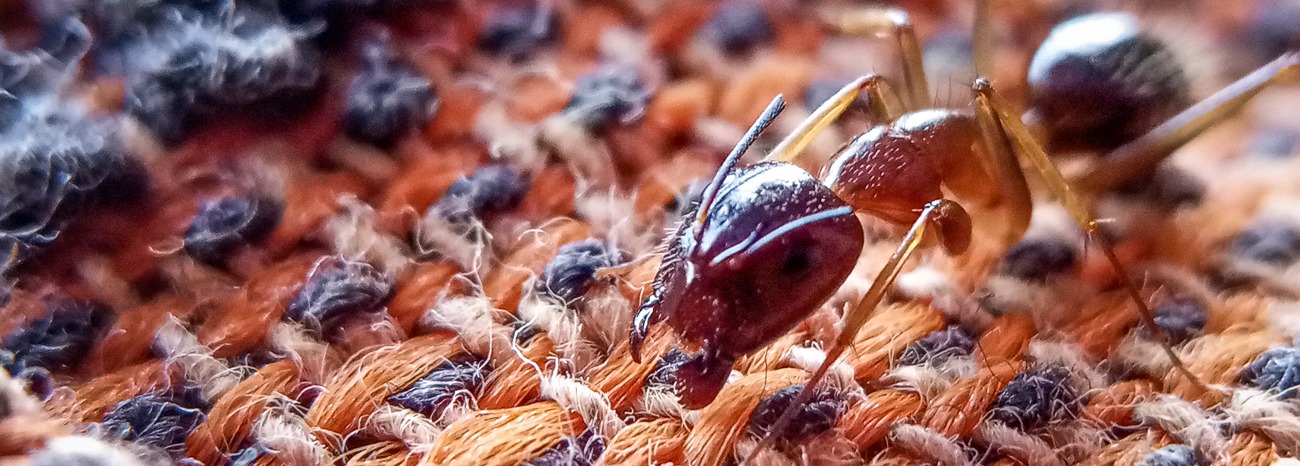
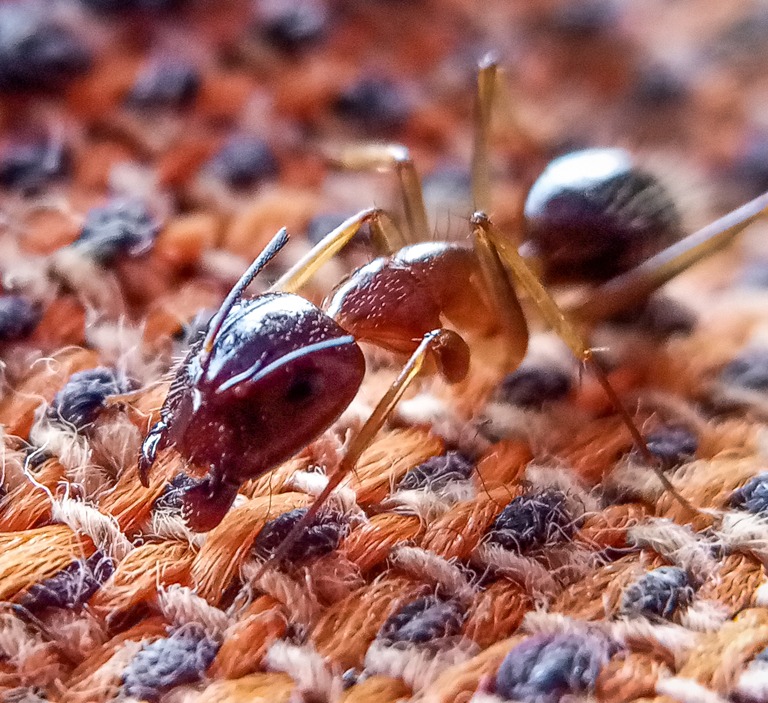
Tiny ants in your bedroom usually come from one of a few common causes: an outdoor colony that has found a route inside, moisture pooling somewhere the ants can access, hidden food residue you don’t know about, or a wall-void colony that has already established indoors. The species you’re seeing is almost certainly odorous house ants or pavement ants, both common across southeastern Pennsylvania. The fix depends on identifying which. Moyer Indoor Outdoor’s pest control team has treated bedroom ant infestations across Bucks, Montgomery, Chester, Lehigh, and Delaware counties since 1869. This guide walks through why ants get into bedrooms specifically (yes, even when there is no visible food), how to identify what species you’re dealing with, and how to get rid of them for good.
What kind of tiny ants are in your bedroom?
Most tiny ants that end up in bedrooms across Pennsylvania are one of two species: odorous house ants or pavement ants. Identifying which you have determines how to get rid of them, so this is the first step.
Odorous house ants (OHA)
Odorous house ants are small (about 1/8 inch or 3 mm), dark brown to black. The most reliable identifier: when crushed, they produce a distinct rotten-coconut or blue-cheese smell. That’s where the name comes from, and it’s diagnostic. If you smell that odor after squishing one, you’re dealing with OHA.
OHA colonies have multiple queens and expand through a process called budding, where a group of workers splits off with a queen to form a new subcolony. Colonies non-hostile toward related subcolonies can grow into massive interconnected networks called supercolonies. This biology is why OHA are notoriously persistent, why store-bought spray treatments often fail, and why crushing a trail of them can actually make the infestation worse by triggering the colony to bud and multiply.
Pavement ants
Pavement ants are slightly smaller (2.5 to 4 mm), dark brown to black. Under a magnifying glass, they show distinctive parallel furrows on their head and thorax that OHA lack. Pavement ants are one of the most commonly encountered house-infesting ants in Pennsylvania. Their name comes from their preference for nesting under sidewalks, driveways, and building foundations. They enter homes through cracks in slab foundations, gaps around plumbing penetrations, and settlement cracks in exterior walls.
Little black ants
Little black ants are even smaller (1/16 inch or 1.5 to 2 mm), jet black. Less common in Pennsylvania bedrooms than OHA or pavement ants but not rare. They forage in trails and are strongly attracted to sweets and greasy foods.
If the ants you’re seeing are large (half an inch or more, either solid black or reddish-black), you’re dealing with a different species that requires a different approach. This guide focuses on the small ants that end up in bedrooms specifically.
Why are there ants in my bedroom if there’s no food?
This is the most common question we get about bedroom ants. The short answer: ants are not always looking for food. They’re also looking for water, warmth, and shelter, and bedrooms provide all three. Four factors explain most cases:
Moisture is the leading non-food cause
Common bedroom moisture sources that attract ants:
- Condensation on windows or window sills during humid weather
- A slow drip from a bathroom on the other side of the wall
- A leaking window seal that lets moisture into the wall
- A small plumbing leak inside the wall that isn’t visible from the room
- A humidifier or dehumidifier with a full drip tray
- A water glass on the nightstand that gets refilled but never emptied
- Pet water bowls if pets sleep in the bedroom
- HVAC condensate lines running through nearby walls or a full condensate pan
Wall-void colonies
Odorous house ants in particular will establish colonies inside wall voids where warmth from heating systems, hot water pipes, and heaters creates ideal conditions. Once a colony is established inside a wall, the ants don’t need external food or water sources to sustain the colony. They’re getting both from wherever the nest has established, which may be nowhere near your bedroom. What you’re seeing in the bedroom is worker ants exploring outward from the interior colony. This is a common cause of persistent “ants with no food” infestations, and it usually needs professional treatment to fully resolve because you can’t reach the colony with topical treatments.
Trail memory from past food access
If ants ever had food access to your bedroom in the past (crumbs from snacking, a spilled drink, pet food), workers laid pheromone trails during that period. Even after you’ve cleaned up thoroughly, other workers continue to follow the trail for days or weeks, searching for the food that used to be there. Cleaning removes the visible food but not the invisible pheromone trail. Disrupting the trail requires either time, thorough cleaning with a soapy or vinegar solution along the trail path, or elimination of the colony itself.
Ants are actively exploring
Worker ants explore continuously, searching for new food sources, water, and nesting sites. A bedroom with entry points and any of the conditions above will attract exploring workers whether food is present at the moment or not. Seeing a few ants in a bedroom isn’t necessarily an infestation; it may be an outdoor colony’s scouts checking whether your bedroom is a viable resource. If you eliminate the attractants and seal the entry points quickly, exploration usually moves elsewhere.
Common bedroom attractants homeowners don’t think about
Beyond obvious food and moisture, several common bedroom conditions attract ants:
Snacking in bed. Crumbs from crackers, chips, cereal, or cookies eaten in bed accumulate in sheets, between mattress and box spring, and along the headboard. Ants easily find these. If anyone in the house eats in bed at all (including kids and teenagers), it’s a factor.
Beverages left overnight. A wine glass, coffee cup, or soda can left on the nightstand overnight is a strong ant attractant. Sugary drinks are especially attractive to odorous house ants and little black ants.
Pet food and pet water. If a pet sleeps in the bedroom with food or water bowls in the room, that’s a durable attractant that ants will find.
Sugar residue on surfaces. Sticky spots on nightstands, dressers, and headboards from spilled drinks, cough syrup, or sugary medications continue attracting ants long after the spill has been forgotten.
Houseplants. Bedrooms with plants have moisture (from watering) and sometimes attracting substances (honeydew produced by aphids on infested plants). Check plant leaves and undersides for aphids or other sap-feeders if ants are trailing to plants.
Bedroom trash cans without lids. A trash can that isn’t emptied regularly, particularly if it collects tissues with food residue or wrappers from bedroom snacks.
Unused rooms nearby. A guest bedroom, spare bedroom, or storage room adjacent to yours that isn’t monitored can develop conditions ants like: moisture, other insects the ants prey on (silverfish, pill bugs), and undisturbed nesting sites in stored boxes and clothing.
How to get rid of ants in your bedroom
The steps below work for odorous house ants, pavement ants, and little black ants. Diagnose the species first (using the identification section above), then work through the steps in order.
Step 1: Follow the trail
Watch where the ants come from and where they’re going. Follow the line back to its entry point if possible. This tells you where they’re getting in and often points to what’s attracting them. Common entry points: gaps around window frames, small cracks along baseboards, the seam between wall and ceiling, gaps around outlets or switch plates on exterior walls, and gaps around plumbing penetrations.
Step 2: Do not crush or spray the trail
This is the most common mistake, and it makes odorous house ant infestations dramatically worse. Crushing OHA can cause the colony to bud (form new subcolonies) as a stress response. Spraying with household cleaner or store-bought insecticide kills the visible workers but leaves the colony intact, and other workers replace them within days. Spraying also destroys the pheromone trail, which sounds helpful but actually prevents you from using bait effectively in Step 4 because you need the workers to trail food back to the colony.
Step 3: Address attractants
Remove any food or beverage sources. Fix any leaks or moisture issues. Empty pet water bowls at night. Move houseplants out of the bedroom temporarily. Empty trash cans. This alone often reduces or stops activity for outdoor colonies that were just exploring.
Step 4: Use ant baits, not sprays
Baits work by allowing worker ants to carry the active ingredient back to the colony, where it kills the queens and larvae over several days. Baits require patience: you may see MORE ants during the first few days as workers recruit others to the food source, but activity should decline sharply within a week to two weeks.
Consumer baits containing borax or hydramethylnon are commonly effective for odorous house ants and pavement ants. Place baits along the trail, not on top of the ants. Follow the label instructions on placement, quantity, and duration. Do not spray the area around the baits, because repellent insecticide will keep ants away from the very bait you need them to carry home.
Step 5: Seal entry points
Once activity has stopped, use caulk, foam, or weather stripping to seal cracks, gaps around plumbing and electrical penetrations, and gaps around windows and doors. This prevents the next colony from finding the same route. Exterior sealing (around foundation penetrations, weep holes, and utility entries) prevents new outdoor colonies from getting inside in the first place.
Step 6: Monitor for four to six weeks
Some colonies persist even after apparent success. Watch for renewed activity for four to six weeks and re-treat if ants return. Persistent renewed activity after two rounds of treatment usually indicates a wall-void colony that requires professional treatment to reach.
How to get ants out of your bed specifically
If the ants are actually in your bed (not just in the bedroom), you need to address the bed itself in addition to the bedroom-level steps above.
Strip the bed completely. Wash all sheets, pillowcases, mattress covers, and any bedding on the hottest cycle your fabric allows. Heat kills any workers hitchhiking in the bedding.
Vacuum the mattress and box spring thoroughly, paying attention to seams, folds, and the underside. Remove any crumbs or debris that might be attracting ants to the bed specifically.
Check the headboard, frame, and slats for any hidden gaps where ants may be harboring. Wooden bed frames can develop tiny cracks that provide shelter for scouting workers.
Move the bed away from the wall temporarily to inspect for trails coming from behind or beneath. Bed frames pushed tight against exterior walls often hide the actual entry point.
If ants are still returning to the bed after these steps, the colony is close by and the problem needs to be addressed at the source: wall voids, an adjacent room, or a nearby entry point.
A quick note on health: ants in a bed are not a health hazard in the way bed bugs are. Ants don’t feed on humans, with rare exceptions (fire ants, which are not typical in Pennsylvania bedrooms). They will not bite you in your sleep. That said, waking up to ants on your pillow is unsettling, and the source deserves prompt attention. If you’re not sure whether you’re seeing ants or bed bugs, our guide to bed bug identification covers the differences.
Why upstairs bedrooms sometimes have more ants than downstairs
Homeowners often ask why an upstairs bedroom has ant problems that first-floor rooms don’t. Several factors contribute:
Wall-void colonies in warm attic-adjacent spaces. Second-floor rooms often border attic space where insulation and warmth create ideal ant nesting conditions. Colonies established in attic-adjacent walls send workers down into the bedrooms below.
Roofline entry points. Fascia boards, soffits, gutters, and roof vents are all potential entry points that specifically affect upper floors. Once ants get inside the exterior envelope through a roofline gap, they follow warmth and moisture down into the living space.
Sun-warmed exterior walls. South and west-facing upstairs walls warm significantly on sunny days and attract ants seeking warmth, especially in spring and fall when nighttime temperatures are still cool.
HVAC and plumbing chases. Vertical plumbing chases and HVAC runs between floors provide protected pathways ants use to move between areas of the house without ever going through open living space.
Upstairs bathroom leaks. A slow leak in an upstairs bathroom can produce moisture in adjacent bedroom walls that becomes a strong ant attractant. Because the leak is often invisible from the bedroom side, homeowners don’t connect the moisture to the bathroom.
When to call a professional
DIY treatment often works for smaller odorous house ant or pavement ant issues, particularly when caught early. Professional treatment becomes worth it when:
- Bait treatment hasn’t reduced activity after two to three weeks
- Ants appear along baseboards, from behind switch plates or outlets, or from where walls meet ceilings, all of which suggest a wall-void colony
- Multiple bedrooms or rooms are affected simultaneously
- You’ve eliminated obvious attractants and ants keep returning
- You suspect the colony is in a difficult-to-access location like a subfloor, attic, or inside a slab
- The infestation started in spring and has grown through summer, suggesting an established multi-queen colony
Moyer Indoor Outdoor’s licensed pest control technicians treat bedroom ant infestations across Bucks, Montgomery, Chester, Lehigh, and Delaware counties in Pennsylvania. Our technicians use professional non-repellent products that colonies carry back to their queens without recognizing them as insecticide. These are significantly more effective at eliminating multi-queen odorous house ant infestations and wall-void colonies than any store-bought spray or bait.
Call (215) 799-2010 or schedule an evaluation online.
Frequently asked questions
Why are there tiny ants in my bedroom if there’s no food?
Ants aren’t always searching for food. They’re also looking for moisture, warmth, and shelter. Common non-food reasons include condensation on windows, a slow leak in a nearby bathroom, a wall-void colony that has already established indoors, or pheromone trails from past food access that workers are still following. If you’ve eliminated visible food and ants keep returning, moisture or a wall-void colony is the most likely cause.
What are the tiny black ants in my bedroom?
Most tiny black ants in Pennsylvania bedrooms are odorous house ants (1/8 inch, dark brown to black, smell like rotten coconut when crushed) or pavement ants (2.5 to 4 mm, dark brown to black, parallel furrows on head and thorax). Little black ants (1/16 inch, jet black) are a less common third possibility. Correct identification determines the right treatment approach.
How do I get rid of ants in my bed?
Strip the bed and wash all bedding on the hottest cycle the fabric allows. Vacuum the mattress and box spring thoroughly, focusing on seams and the underside. Check the frame, headboard, and slats for gaps where ants might harbor. Move the bed away from the wall to inspect for trails coming from behind. Then treat the source of the ants using baits (not sprays), address moisture and food attractants, and seal entry points. If activity continues, the colony is close by and likely needs professional treatment.
Do ants bite you in your sleep?
The tiny ants typically found in Pennsylvania bedrooms (odorous house ants, pavement ants, little black ants) do not feed on humans and will not bite you in your sleep. Fire ants can bite, but they’re not typical in Pennsylvania bedrooms. If you’re waking up with bites, you may be dealing with a different pest, most commonly bed bugs. Our bed bug identification guide covers the differences.
Why do I have ants in my upstairs bedroom but not downstairs?
Upstairs bedrooms are more susceptible because they border attic space (which harbors colonies in warm insulation), share walls with attic entry points like soffit and roofline gaps, and often receive stronger sun on exterior walls, which attracts ants seeking warmth. HVAC chases and plumbing runs also carry ants vertically between floors.
Should I spray or crush the ants I see?
No, and especially not if you’re dealing with odorous house ants. Crushing OHA can trigger the colony to bud into new subcolonies, making the infestation worse. Spraying kills the visible workers but leaves the colony intact, and replacement workers appear within days. It also destroys the pheromone trail you need workers to follow back to bait. Use baits instead of sprays.
Why do ants keep coming back after I clean?
Cleaning removes visible food but not the pheromone trail workers use to navigate. Other workers continue following the trail for days or weeks. Additionally, if the colony is inside a wall void, cleaning the room doesn’t affect the colony at all. Persistent recurrence after thorough cleaning is a strong signal that professional treatment is needed to reach the actual colony.
How long does it take to get rid of ants in a bedroom?
Bait-based DIY treatment typically shows meaningful reduction within one to two weeks and full elimination within three to four weeks for smaller colonies. Larger multi-queen odorous house ant colonies or wall-void colonies often take four to eight weeks with professional treatment, since the professional products need multiple cycles of transfer through the colony to reach all the queens. Persistent monitoring for four to six weeks after apparent elimination is important because OHA colonies can appear to be gone and then return from remaining subcolonies.
Are ants in the bedroom a sign of a bigger problem?
Sometimes. Persistent ants in a bedroom (especially recurring OHA appearances after treatment) can indicate a moisture problem in the wall, a hidden plumbing leak, or an established wall-void colony that has been present for months. Ants can also indicate other pest activity, since some ant species eat other insects like silverfish and pill bugs. If ant activity continues after obvious attractants have been addressed, an inspection to identify the underlying cause is worth the visit.